
Articles · Space, Heard
Why a hall for Korean music must be different
Korean traditional music asks different things of a room than Western music does. The remodeling of the Umyeondang shows what that means in practice.
Many of the halls built in Korea in recent decades were designed around Western music. Their acoustic targets, their proportions and even the vocabulary used to describe them came from concert halls built for orchestras. When those halls host Korean traditional music, something is often missing: the music sounds distant, the quietest instruments disappear, and with no support from the room, performers come to rely on microphones.
The reason is not that one kind of music is more demanding than the other. It is that they ask different things of a room.
Two kinds of music, two kinds of room
Korean traditional instruments are, on the whole, quiet. A gayageum or a daegeum produces far less sound power than a violin section or a brass section, and the difference in level between the softest and loudest instruments in a gugak (Korean traditional music) ensemble is large. The music lives in rhythm, breath and the space between notes rather than in dense harmony.
It also grew in a different setting. Much of the repertoire developed as chamber music, played in rooms for small audiences who sat close to the performers. Western orchestral music, by contrast, grew together with large halls, long reverberation and a clear division between stage and audience.
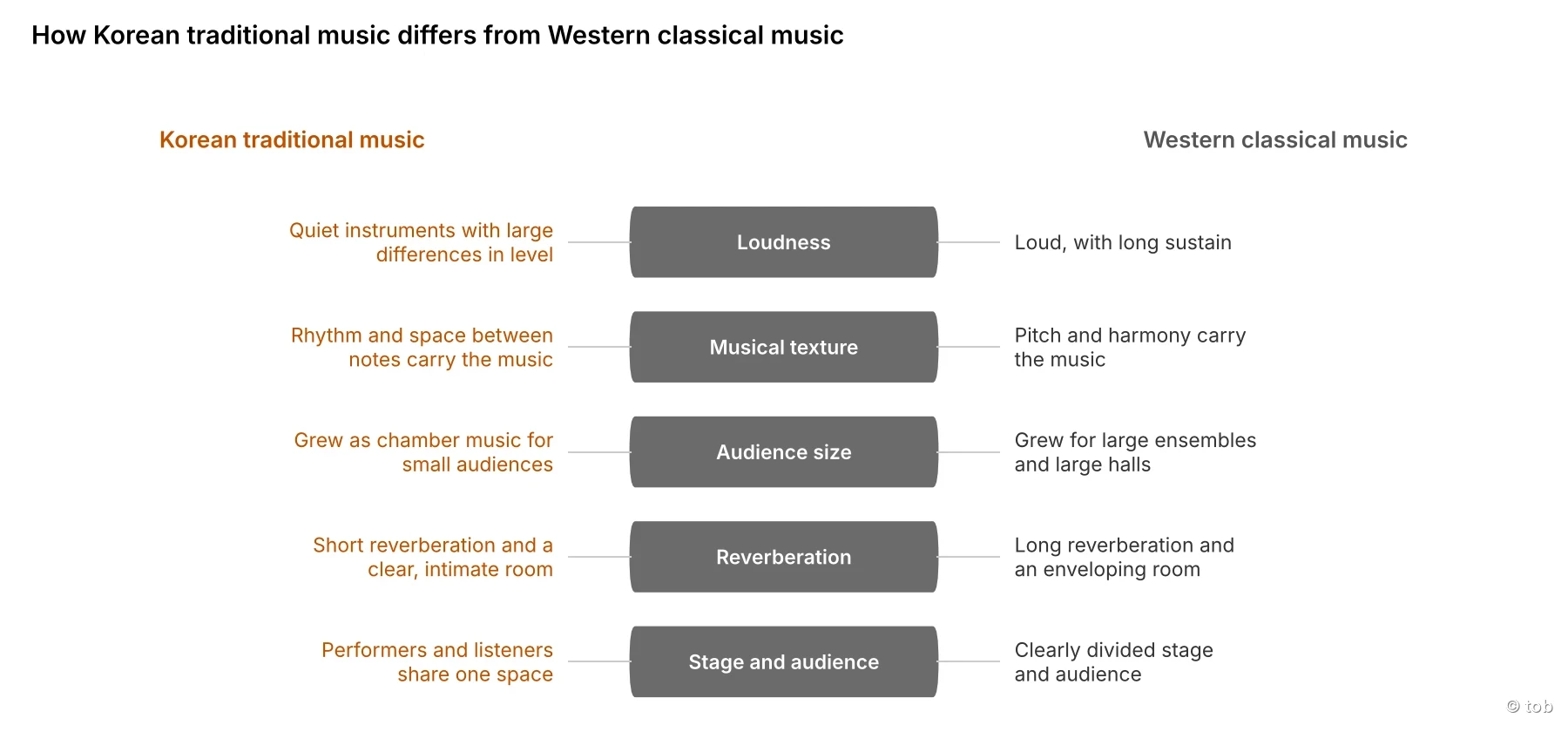
These differences translate directly into acoustic requirements. A Western concert hall needs a long, rich reverberation that blends the orchestra into one sound. Korean traditional music, by contrast, needs a shorter, clearer reverberation in which each instrument and the pauses between notes can be heard, and the intimacy of performers and listeners sharing one space. In a hall for Korean music, strong early reflections arriving at the right time therefore matter more than a long reverberation.
What happens in a hall built for Western music
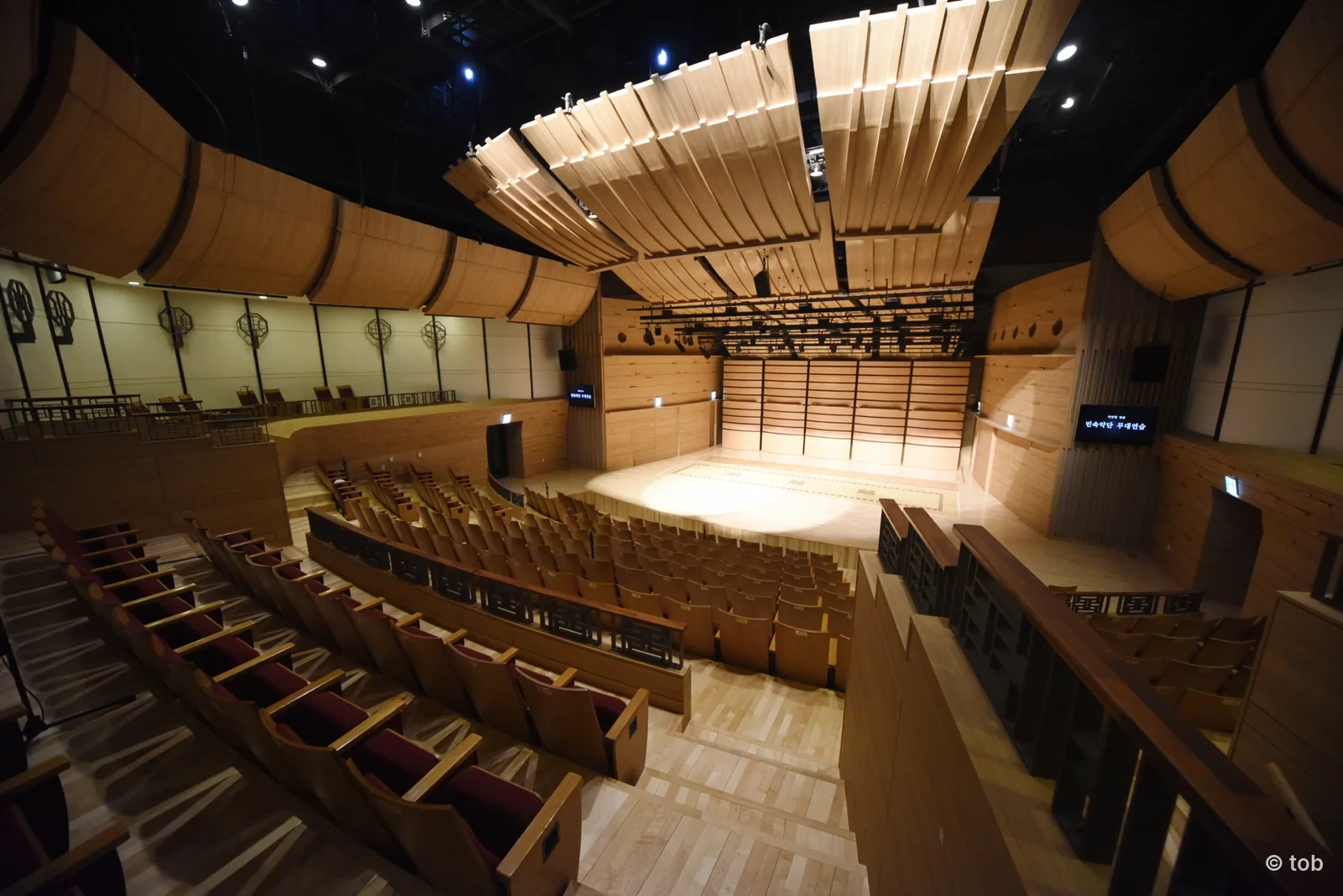
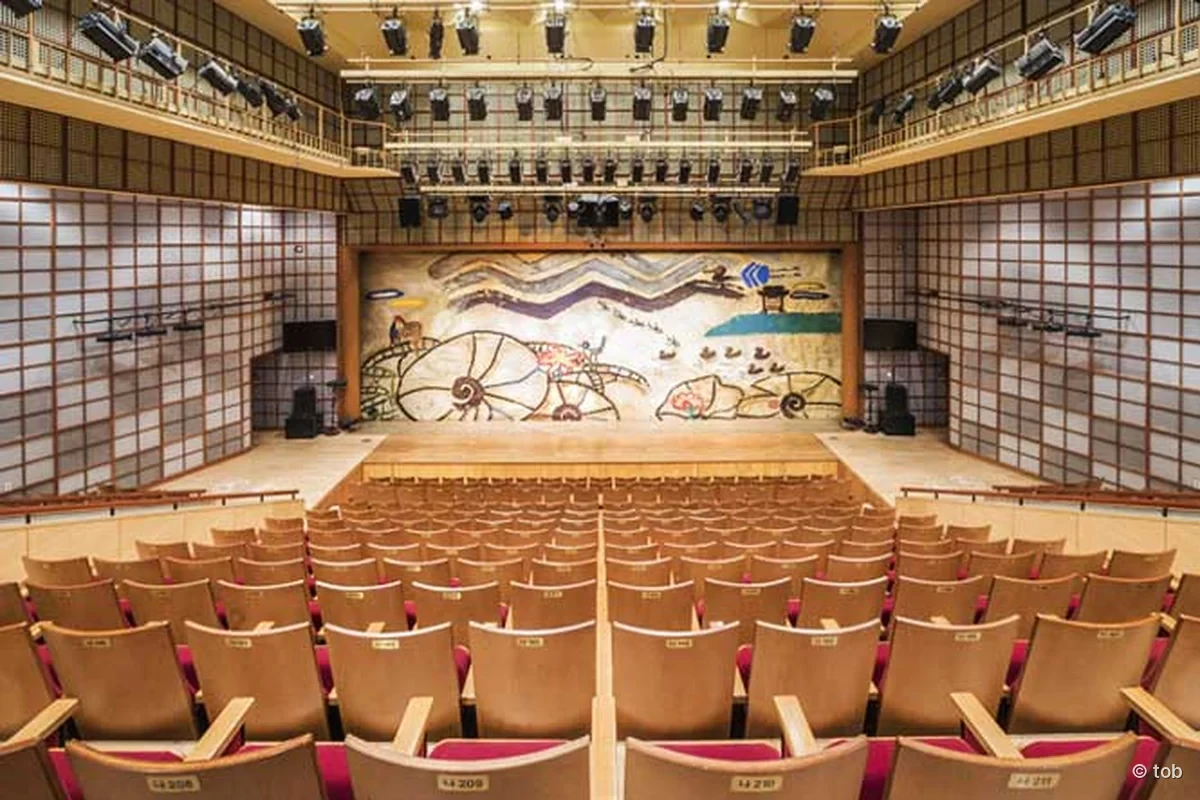
The Umyeondang at the National Gugak Center in Seoul showed the problem clearly before its remodeling. The room was wider than it was deep, with a high ceiling, parallel side walls and a steep rake of seats. There were few effective reflecting surfaces to return early reflections to the audience, so quiet instruments sounded thin and far away, and amplification had become the default rather than the exception.
None of these features is a fault in itself. A high, open volume can serve an orchestra well. But in Korean traditional music, where intimacy matters, the sound of quiet instruments disperses in such a room before it reaches the listener.
Designing from Korean traditional music
The remodeling therefore started from Korean traditional music rather than from concert hall standards. The characteristics of Korean traditional music were set against those of Western music, and acoustic targets were set for Korean music: a short, clear reverberation and close contact between stage and audience.
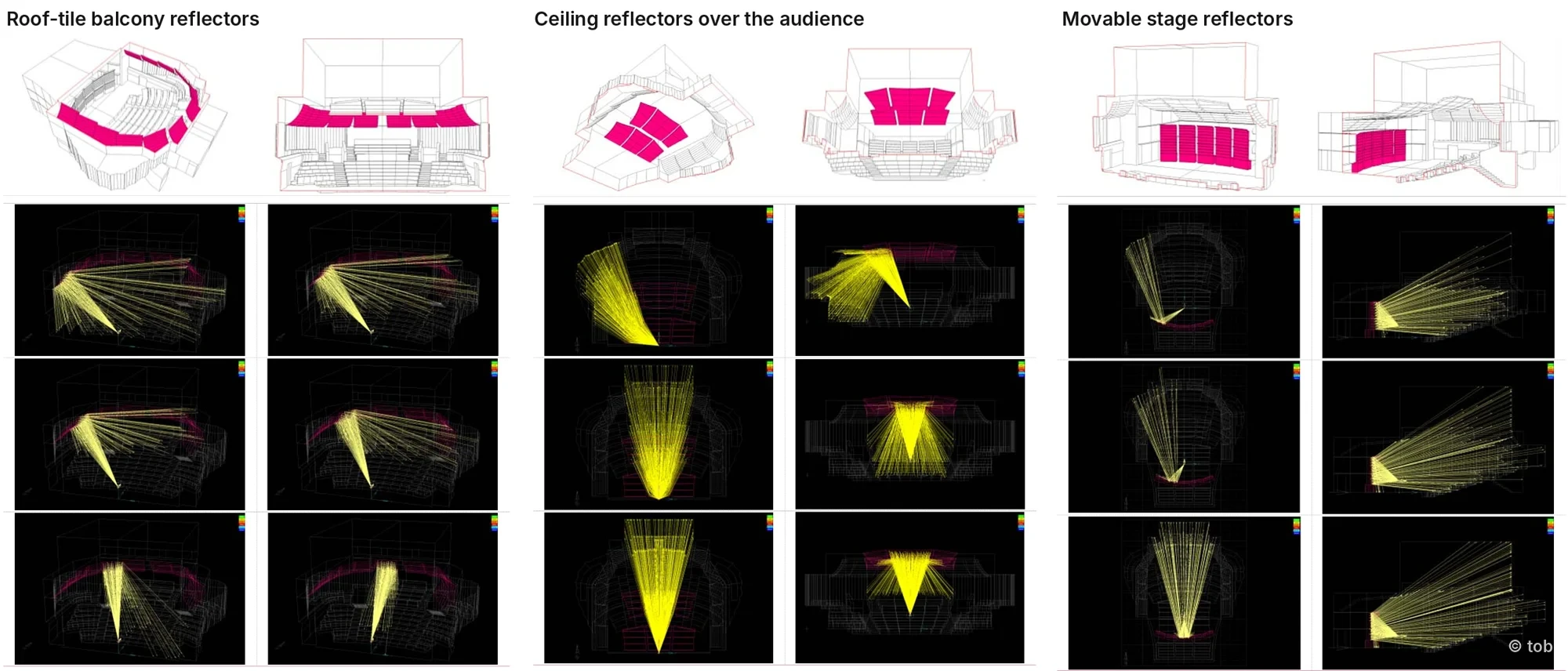
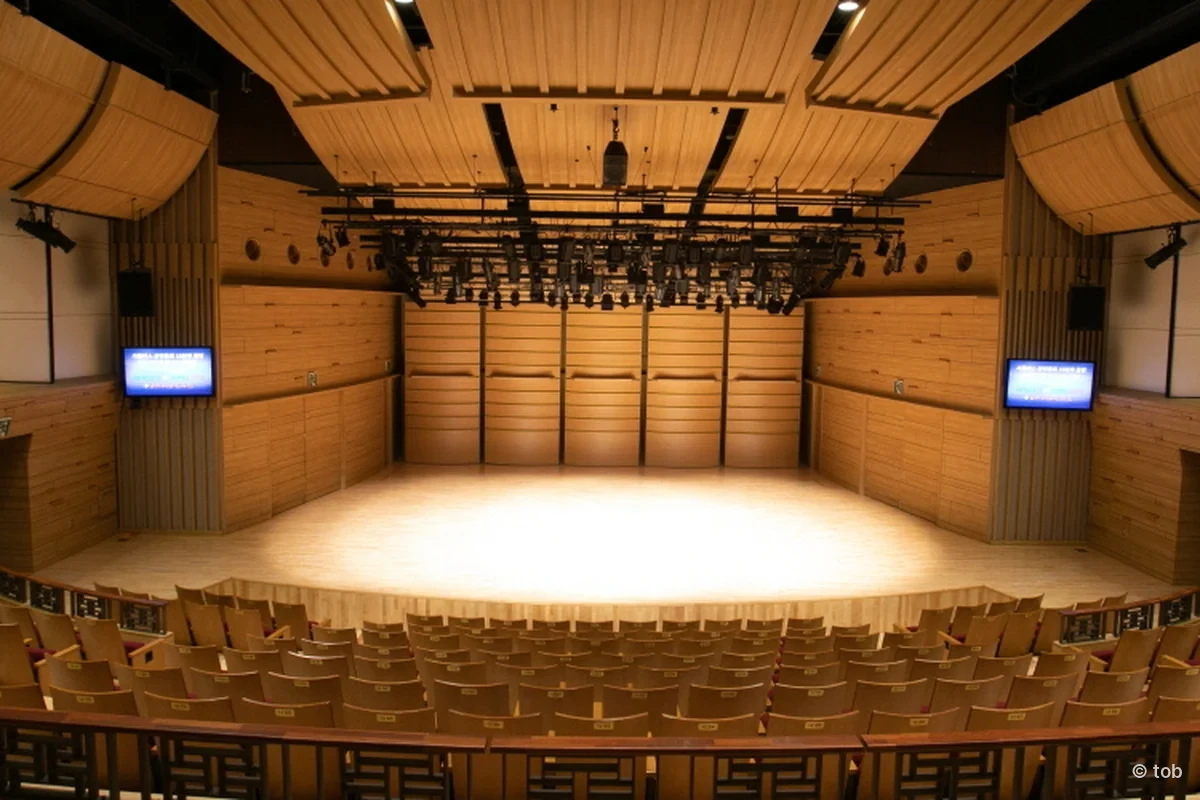
The seating was reshaped to bring listeners closer and to wrap them around the stage. Three families of reflectors were then added and tested by ray tracing: curved reflectors over the audience, reflectors along the side balconies and movable reflectors on the stage. Each was angled so that the first reflections of quiet instruments reach the seats and also return to the performers, who need to hear one another without amplification.
Because the hall also hosts larger ensembles and collaborations with Western instruments, variable absorption was installed behind wall panels with traditional patterns. The reverberation time can be adjusted as needed without losing the character of the room.
Sound in the language of traditional architecture
A hall for Korean music should express the identity of the music in the way it looks, too. So the forms of the reflecting and diffusing surfaces were drawn from traditional Korean architecture. The curved ceiling reflectors recall the rafters of a traditional roof, the balcony reflectors its roof tiles, and the diffusing walls its stone walls and window lattices. These forms are not decoration added afterwards. Each was sized and angled for its acoustic role first.
What this means for other halls
A good number of Korean performing arts centers host Korean traditional music several times a year in halls designed around other music. Not every hall needs a full remodeling, but a few principles apply widely:
- Set acoustic targets for the music that will actually be played, not for an imagined orchestra.
- Place reflecting surfaces on the ceiling, side walls and stage so that early reflections of quiet instruments reach both listeners and performers.
- Let the performers hear one another; a gugak ensemble depends on it just as a string quartet does.
- Treat amplification as a choice made when needed, not as a repair for the room.
Korean traditional music does not need a smaller version of a concert hall. It needs a room designed for the way it sounds.
Related project
National Gugak Center Umyeondang →