
Articles · Field notes
Sails of timber: the concert hall of State Music School No. 1, Warsaw
State Music School Complex No. 1 · Warsaw, Poland · 2020
A hall for about 300 listeners where suspended timber sails, rather than the walls, shape the early sound.
Observations from photographs and published information. tob was not involved in the design of this hall.
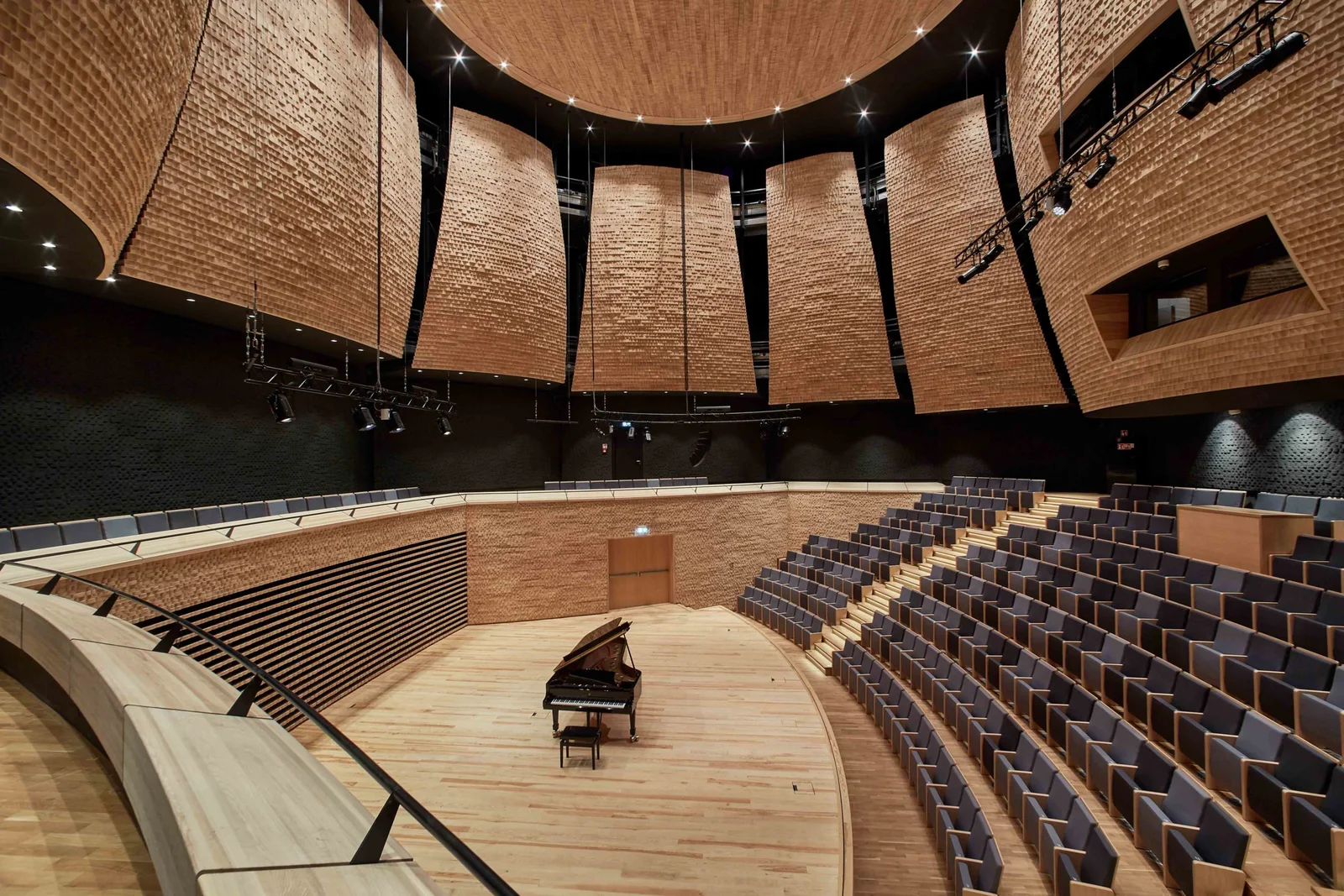
Halls for music schools are usually small and used for many purposes. Completed in 2020, this one seats over 300 listeners and can hold an orchestra of up to 100. What stands out is how it makes its early reflections: not with the walls of the room, but with a ring of suspended timber sails.
Seats that wrap the stage
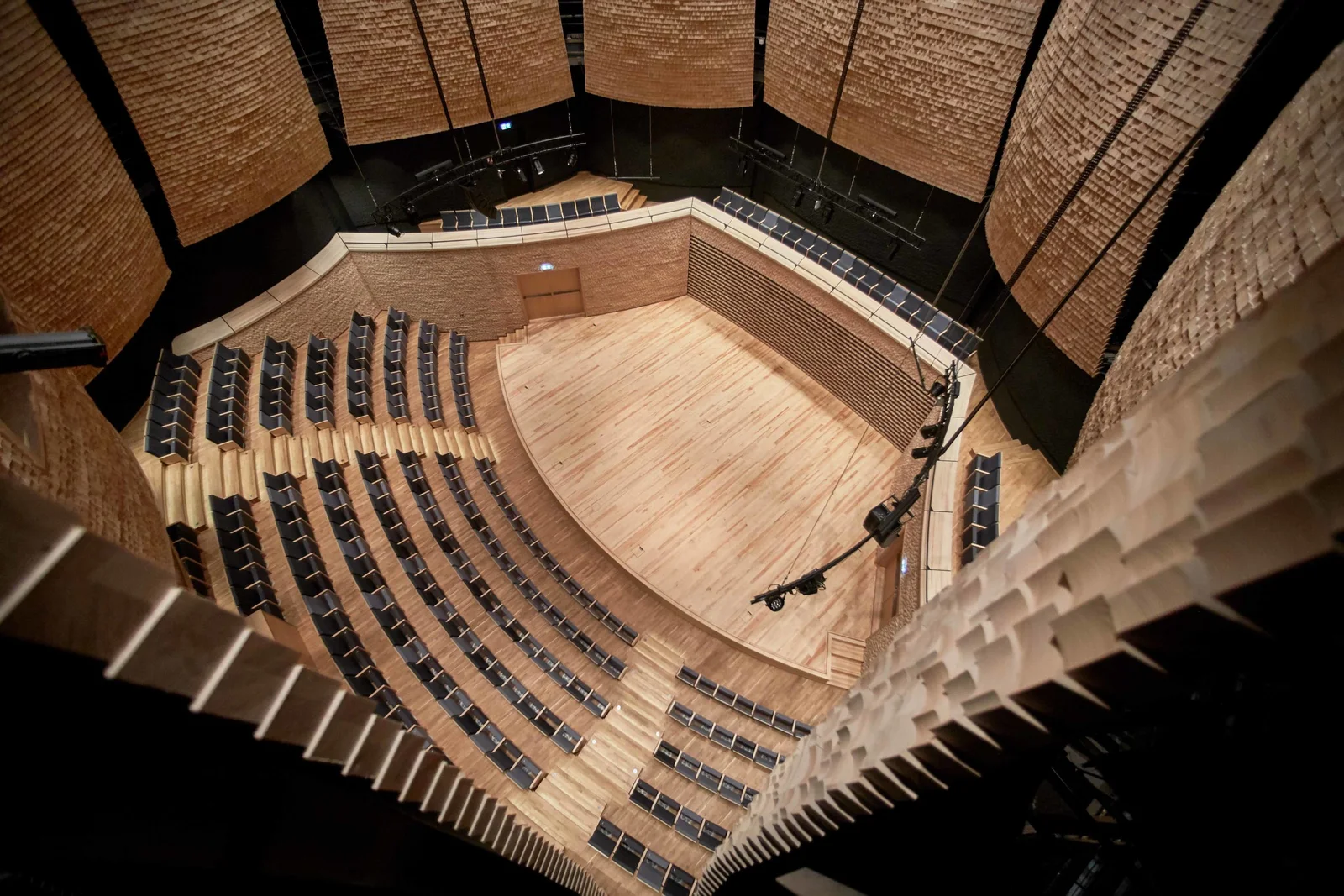
Seen from above, the audience rises around three sides of the platform, with a gallery behind. The furthest seat is only about 8 meters from the stage. In a room of this size, closeness to the stage gives the sound presence before any reflector adds anything.
Reflectors set free from the room
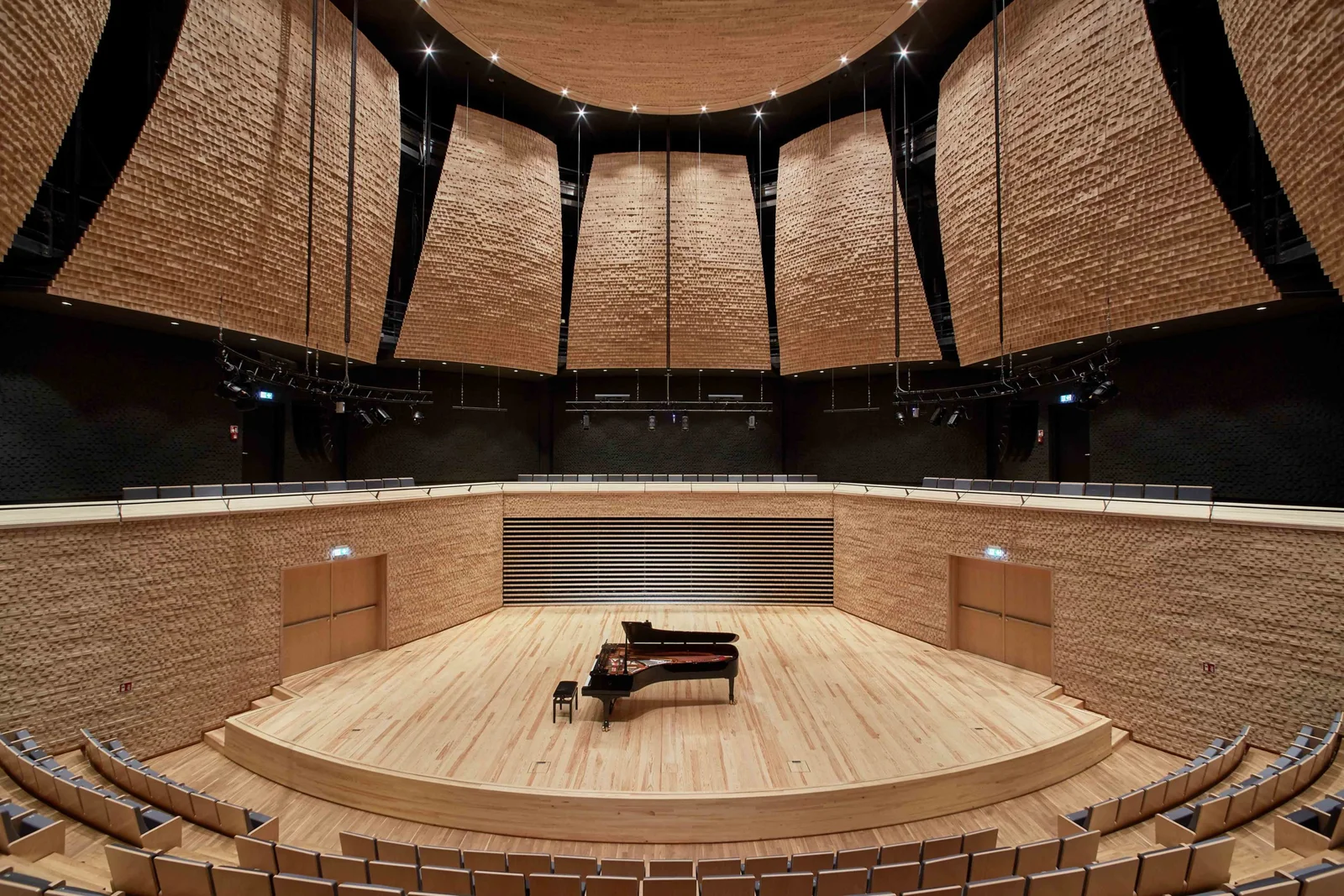
Large convex sails hang around a round ceiling reflector about 14 meters up. The sails near the stage are angled to return sound to the platform and the front seats, while those at the rear keep sound from returning to the stage as an echo. Because the sails stand apart from the walls, the space between and above them also contributes to reverberation and leaves room for fine-tuning.
Micro-diffusing surfaces
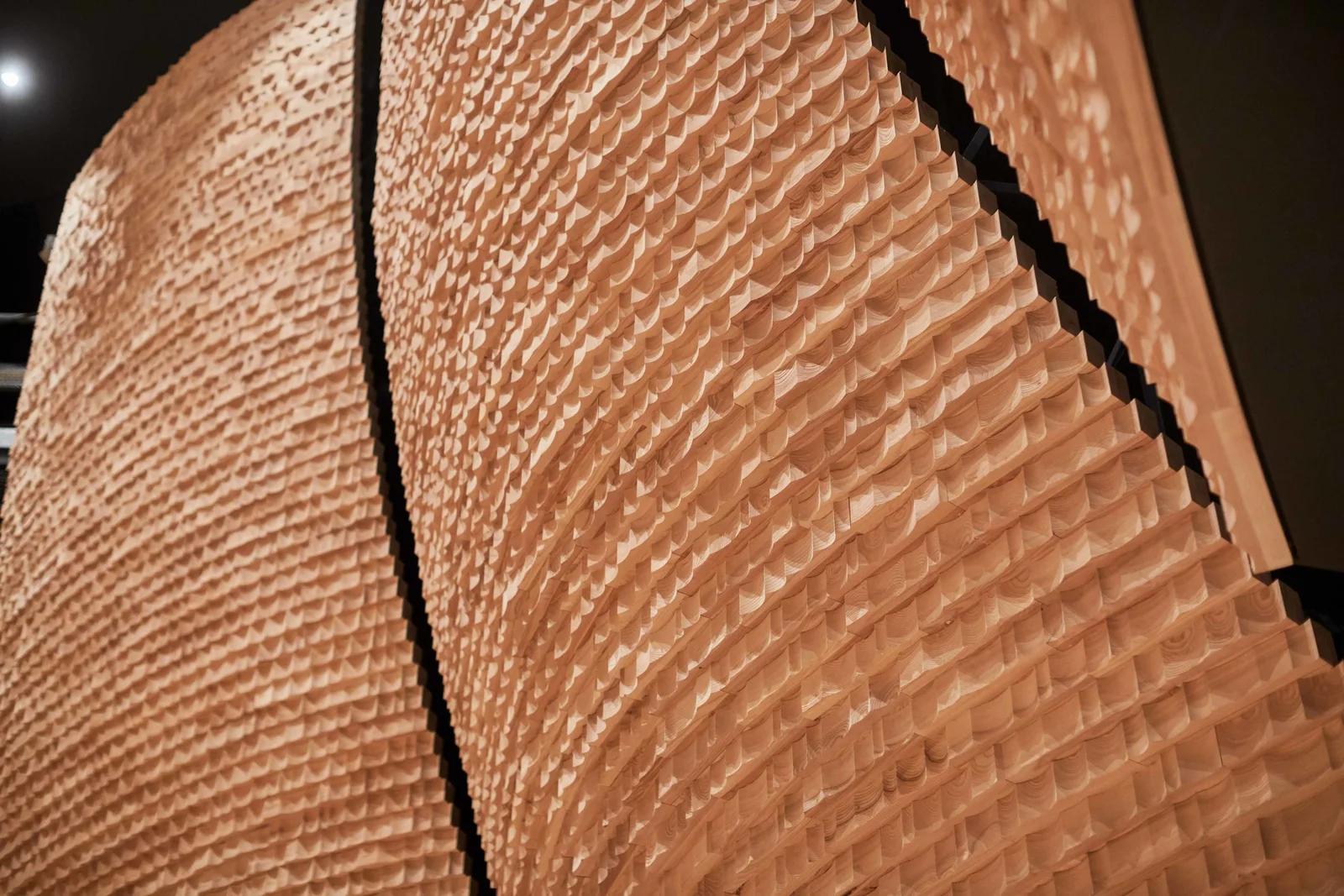
Each sail is made of thousands of small ash blocks of different depths. The irregular surface diffuses high frequencies, so reflections are not returned strongly in one direction but arrive softly spread in many directions. The same texture also runs along the lower walls and the balcony fronts.
Light below, dark above
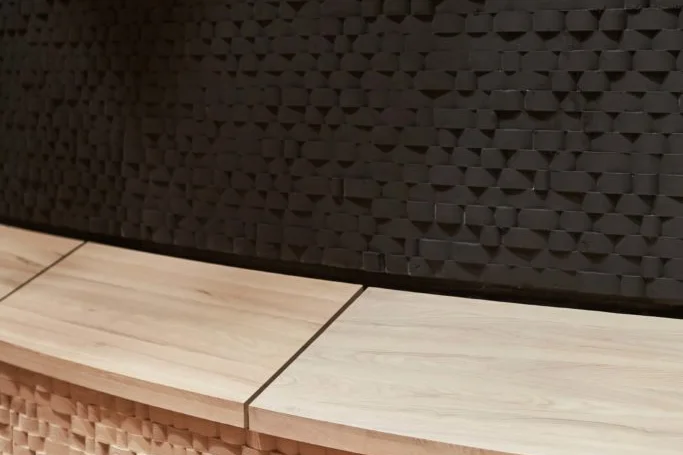
Above the gallery, the walls turn dark and deeply textured. The useful reflections come from the light timber below and from the sails; the upper volume stays quiet and recedes visually. The color change is not only an interior choice; it marks where the acoustic job of the surfaces changes.